Stop Clicking, Start Talking: Why the Best Software Needs No Manual
See how entrepreneurs get more done by talking to their tools.
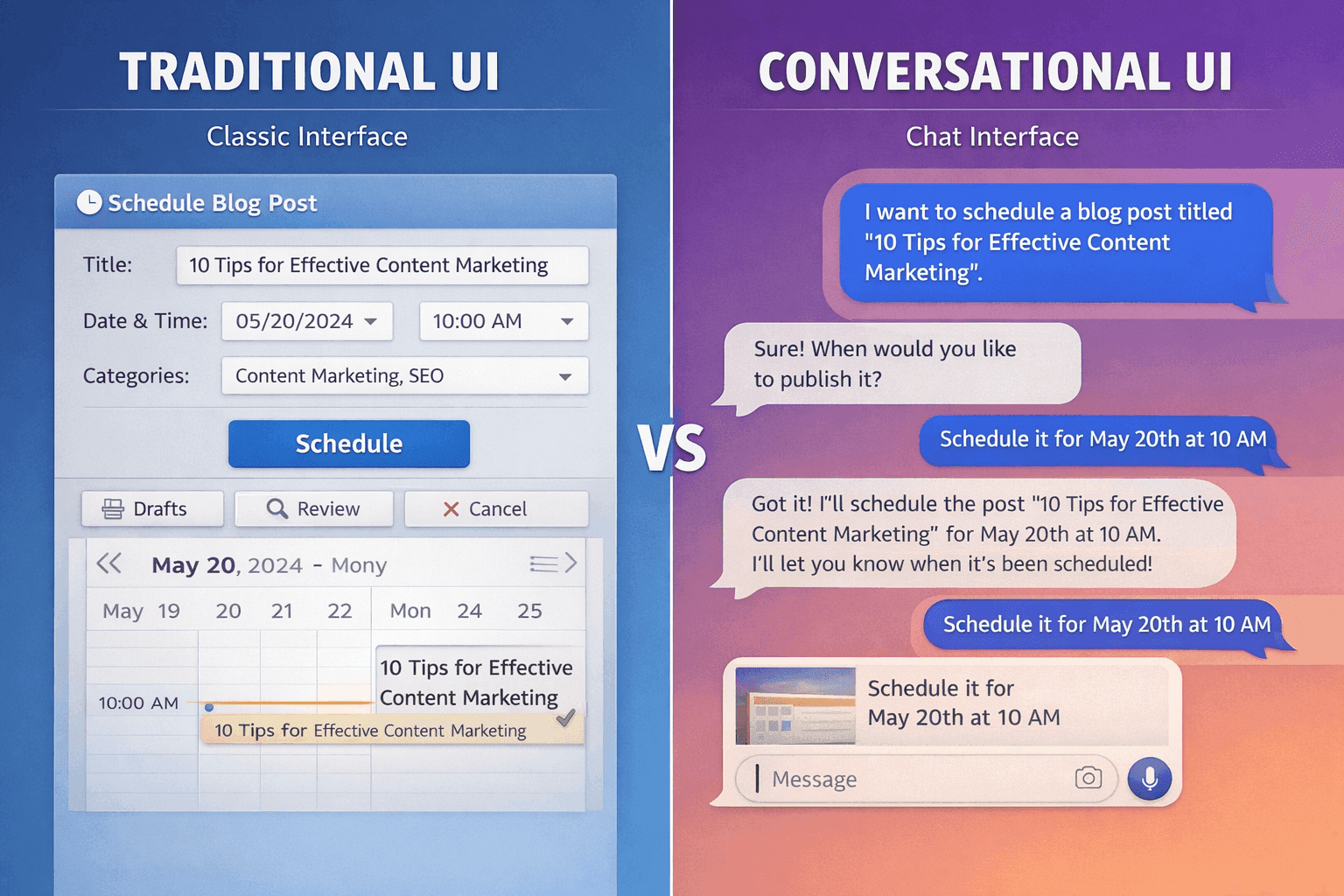
How many software tools do you use daily? Count along: your accounting program, your CRM, your email marketing tool, your social media scheduler, your project management app, your webshop backend. Each with its own interface. Each with its own logic. Each with that one feature you can never find.
Now an honest question: what percentage of all that functionality do you actually use?
For most entrepreneurs, the answer is somewhere between 10 and 20 percent. The rest goes unused. Not because it isn't useful, but because you don't have time to figure out how it works. Or because you forgot that feature even exists.
There's a better way.
The problem with buttons and menus
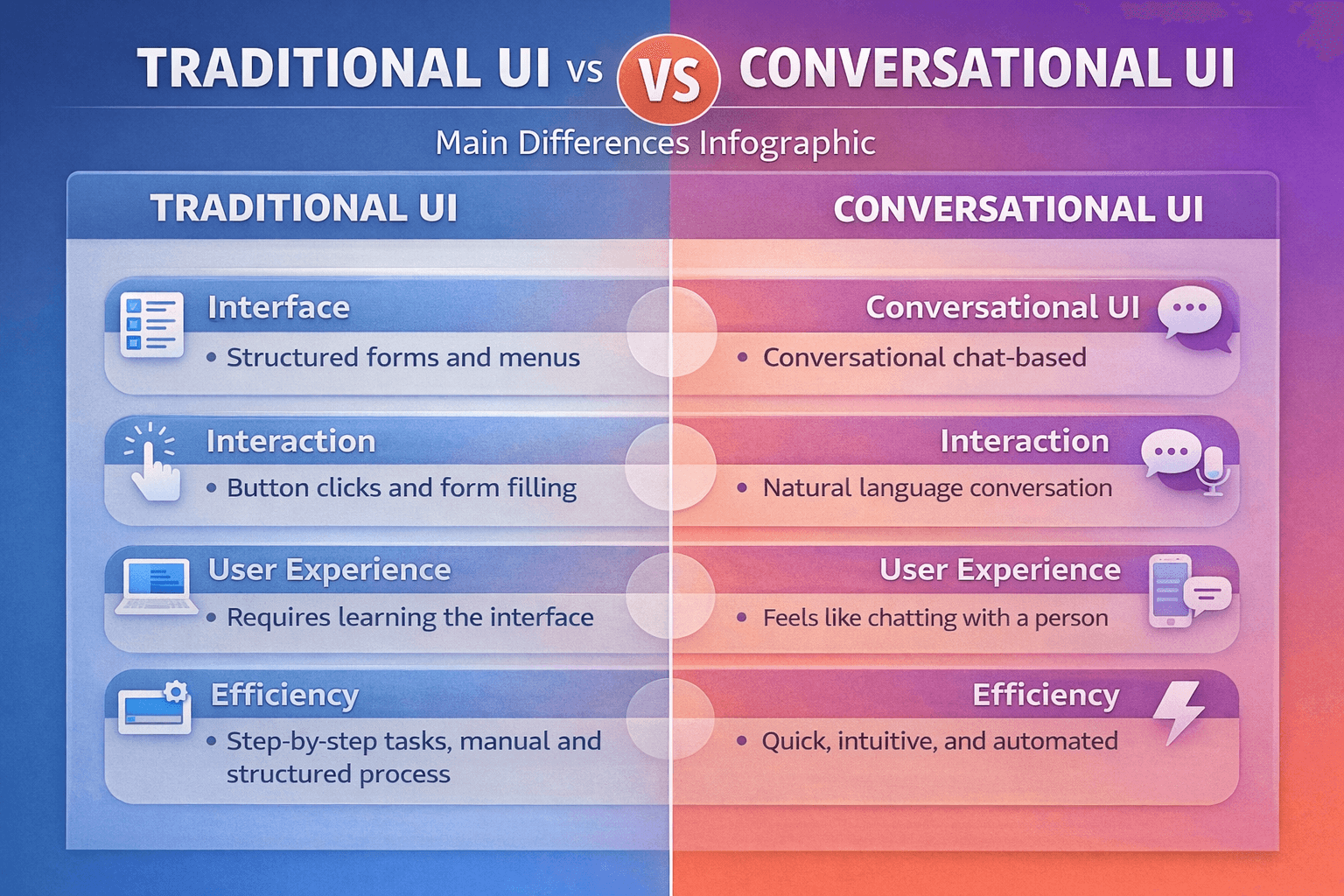
Software has been built the same way for decades. Developers think up features, organize them in menus, and hope users find the right button. The result: programs that can do more and more, but also get more and more complicated.
This model made sense for a long time. Computers only understood exact commands. If you wanted something, you had to tell the computer in its own language. Click here, select that, fill in this field, press save.
But what if your computer just understood plain English?
The rise of conversational software
The latest generation of AI makes something possible that was science fiction ten years ago: software that understands what you mean, not just what you literally say.
"Send all customers who bought something last month a thank-you email."
"Create an overview of my revenue by product category this quarter."
"Schedule three posts about our new collection this week."
No manual needed. No hunting through menus. You say what you want, the software does it.
We call this "conversational over configuration." Instead of adjusting settings and selecting options, you simply have a conversation. Just like you would talk to an employee.
Why this changes everything for entrepreneurs
For large companies with IT departments, complex software wasn't such a big deal. There's always someone who knows how it works. But for you as an entrepreneur, every minute spent figuring out software is a minute not spent on your customers.
Conversational software levels the playing field. You don't need to be technical to use advanced automation. You don't need to take a course to professionalize your marketing. You just need a clear idea of what you want to achieve.
And let's be honest: you always had that clear idea. It was the translation to "software language" that held you back.
Three real-world examples
The e-commerce owner
Lisa runs an online store selling sustainable children's clothing. She used to spend two hours every Sunday planning her social media: selecting photos, writing captions, thinking up hashtags, scheduling posts.
Now she says: "Schedule posts about the new summer collection this week. Focus on the organic cotton. Use those photos I took yesterday."
Total time investment: three minutes. Including reviewing the result.
The coach
Mark is a career coach who struggled with his admin. Quotes, invoices, follow-ups. He knew his accounting software could automate all of this, but he never had time to set it up.
Now he asks: "Create a quote for John Smith, 5 career coaching sessions, with my standard terms." And: "Remind me in three days to follow up if I haven't heard back."
No workflow builders. No configuring templates. Just saying what needs to happen.
The specialist
Anna is a physical therapist with her own practice. Marketing always felt like a necessary evil. She knew she needed online visibility, but writing blogs and posts just wasn't her thing.
Now she simply shares her expertise in a conversation: "Many of my patients struggle with repetitive strain injury. What I usually recommend is..." That knowledge automatically gets translated into a blog post, social media content, and even FAQ answers for her website.
Her expertise now reaches more people, without her having to feel like a marketer.
"But don't I lose control?"
An understandable concern. If you can't see exactly which buttons you're pressing, how do you know things are going right?
The answer lies in transparency. Good conversational software shows you exactly what it's going to do before it happens. You say what you want, the software shows a preview, you approve. Just like an employee who checks back before getting started.
In fact, you often get more control. With traditional software, you have to think of all scenarios in advance and configure them. With conversational software, you can steer at any moment. "A bit less formal please." "Add the price too." "Don't send this to customers in Canada." Nuances that would take ten clicks in a traditional interface.
The learning curve that doesn't exist
Ask an entrepreneur why they haven't started with a certain tool yet, and you'll almost always get the same answer: "I haven't had time to learn it yet."
With conversational software, that learning curve barely exists. Can you have a conversation? Then you can use the software. You discover features by asking, not by reading manuals.
"Can you also...?" Just try it. The worst that can happen is the software says: "I can't do that yet, but here's what I can do."
The shift is already happening
The software industry has figured this out. Virtually every major player is building conversational interfaces into their products. Not as an extra, but as the primary way of working.
Three years from now, logging into a dashboard with twenty menu options will feel old-fashioned. Like sending a fax or using a Rolodex feels today.
Entrepreneurs who get used to this way of working now will have an enormous advantage later. Not because the technology will be harder then, but because they'll already know how to get the most out of it.
Your next step
The question isn't whether conversational software is right for you. Anyone who can talk can use it. The question is which tasks in your business are ready for this approach.
Start with the task that frustrates you most. That job where you think every time: "This should be simpler." That's exactly where conversational software shines. Because simpler is possible. You just needed to be able to say what you wanted.
And you always could.
At Virtalize, we build AI assistants that work through conversations, not complicated interfaces. Because your time is too valuable to spend learning software. Curious what that looks like? Just try it.